Plot 8D
Plot 8D
I’m writing this during a significant burst of searingly warm weather. A fan is whirring in the background as I stay firmly indoors. The UK has not seen consecutive heatwaves of this nature so close together for some time. Over the last two months, temperature records held since 1911 have been broken. This week in particular, plants, animals and humans alike have all been trammeled by uncomfortably high temperatures. Meanwhile, a new Prime Minister has been ushered in after rising frustrations within Labour - the seventh in a decade - and across the Atlantic in America and Canada, extra hydration breaks have been woven into World Cup football matches. A time of fever and fervour. We are all hot and agitated.
For some, the marked arrival of the golden Sun is cause for celebration. Summer is here - a rush of limerence as bbqs spark up, picnic blankets get laid on the grass, lighter clothes get dusted off. Halcyon days. For me, a sense of disquiet that I can’t jettison. As I return to our conversation, the fan whirs in the background and I stay firmly rooted indoors. I begin to tussle with your question but struggle to examine it from any other viewpoint than the present. Abnormal and sweltering, these temperatures - and they hinder and damage - remind us how utterly reliant we are on the land.Will we listen and protect it?
Just two weeks ago, I secured my own new plot of land, Allotment 8D. A five minute stroll from where I live., it was almost completely overgrown. On first view, my eyes widened at the undertaking of this 20 metres by 3 metres site. Since then, my partner and I have managed to clear two and half beds and planted our first Summer crops. As a combination of seeds, seedlings and plants become embedded in the soil, surges of hope are tempered by shadows of eco-grief, this weather revealing the climate emergency we are living through with greater defiance. What grows here, on 8D - and what doesn’t - the next few weeks will begin to reveal.
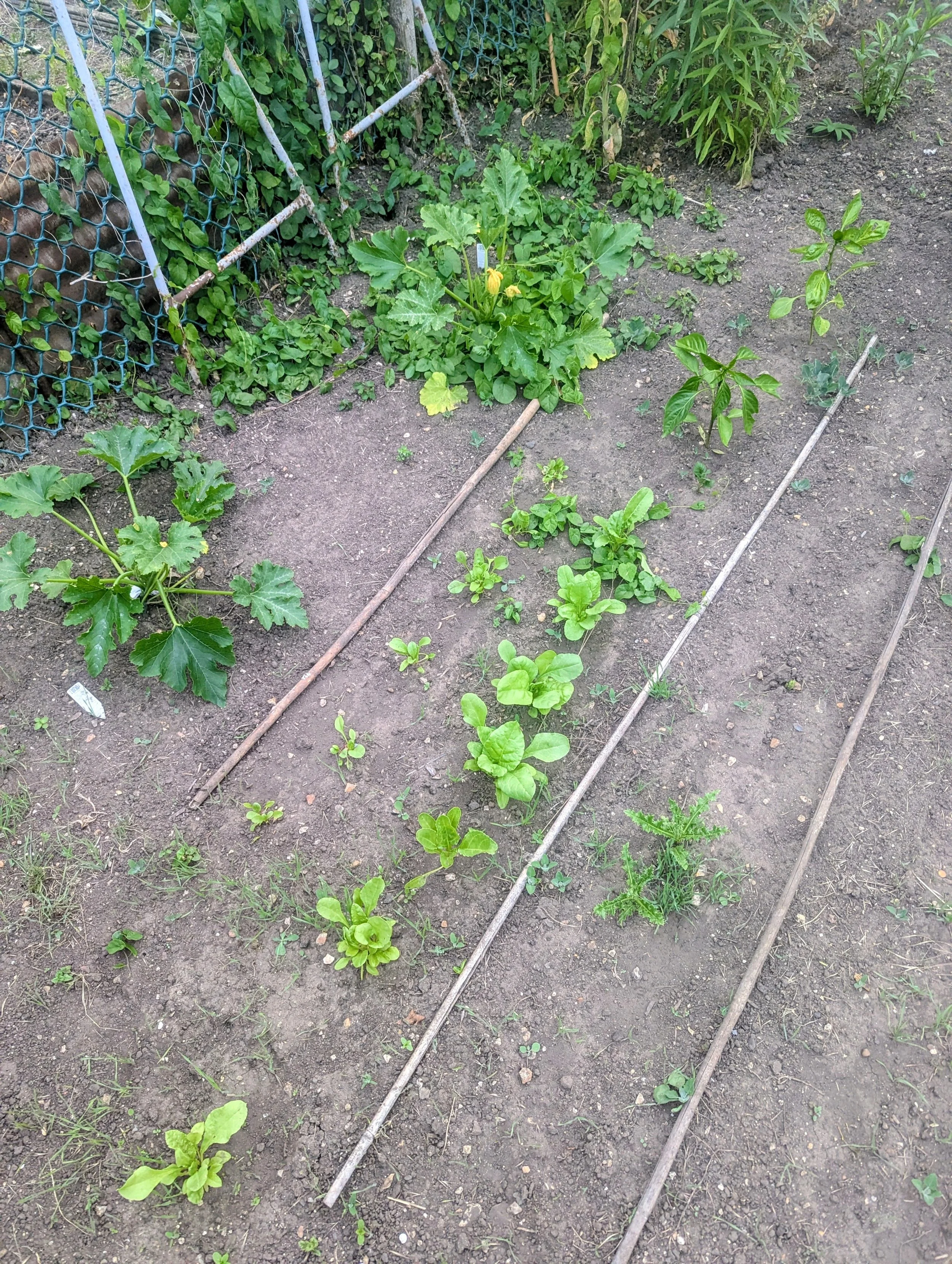
Once the excitement of the potential it holds settled, I’ve been feeling increasingly conscious of the responsibility this small parcel of land brings. The waiting list for allotments here is long and I was prepared for a significant wait. For those who live right in the centre of this small market town, like me, gardens are scant. Despite the rural setting and abundance of green, public spaces, people want spaces to tend, observe, and bring to life. Perhaps this is connected to the markets we have twice weekly. Fruit, vegetables and flowers offer a through-line to local growers, especially those in and around the Fens where much of the produce starts its life. For the most part, the other plots reveal how time, dedication and care can shape land. To it, I bring little experience other than looking after two beds on a shared plot with mixed success over the last few years. This attempt at growing also began in a period of unexpected heat, during the very first lockdown. Radishes, salad, courgettes and runner beans all showed up, willing me on. Such a bounty set unrealistic expectations - atypical of the mixed fortunes growers usually experience.
What’s possible at 8D can be guided by intention and dedication. What’s sown and planted requires near daily support and maintenance not just to give it the best chance of survival, but to translate that effort into taste. But this is only part of the story. Nature and weather could well strong-arm what’s in the ground. There is jeopardy and humility when growing. Egos best dispatched to the safety of the shed.
Plot 8D has been a long-time coming. Beyond the dabbling with the previous allotment, in recent years I’ve become increasingly aware of the role food plays not just in my own life and wellbeing but how singularly significant it is to tackling environmental and social justice. Lying at the center of nature and culture, exploring how we grow, distribute and consume food, tells more than anything else about how we view ourselves and the world we inhabit. And currently, the mirror that food holds us is reflecting ugly truths.
As Plot 8D is tidied and soil emerges beneath the long grasses, brambles and nettles, I’m holding on to ideas of growing as a practice - and the patience this necessitates. It is circular, seasonal and slow. It will be a test-bed for ideas and imagination. Recently, I took part in training through The Transition Movement to feed into this hyper-local approach - to learn how to better ‘dig where I stand’. The power of vision and calls for creative imaginings to underpin co-created, equitable futures is central to their approach. What we can’t imagine, we can’t enact. Rob Hopkins, the founder of The Transition Movement, summarises this as What Is, What If, What Next. Here, artists are absolutely essential in thinking beyond what we understand to be possible and accept as being just. Imagination is without doubt one of the most powerful tools we have in dreaming differently, generating hope, and developing our capacity to move beyond the status quo. But as I look out on the pale yellow, straw-like grass that blankets will be cast upon, I feel rooted in the present - the gap between where we want and need to go in the future and where we are, has collapsed. The choice between reconciling where we are Now, and understanding how we act differently Now, is stark.